

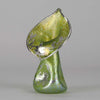
Legacy in Light: The Story of Czech Glass – Part 5
, by Lucie Kabova, 45 min reading time
, by Lucie Kabova, 45 min reading time
Published by Lucie Aboegla, Domus Artis
Welcome to the fifth chapter of our ongoing series exploring the rich heritage of Czech glassmaking. From its historic roots and visionary schools to the sculptural innovations that shaped modern art, each chapter uncovers a new facet of this extraordinary story: the artists, techniques and timeless beauty that continue to define the Czech Republic’s global reputation for glass artistry
Follow the journey, and discover how history, craftsmanship, and light come together to create a true Legacy in Light.
The second half of the nineteenth century represents one of the defining chapters in the history of Bohemian glassmaking. Following centuries of continuous technological refinement and artistic achievement, the industry entered an era characterised by unprecedented industrial expansion, rapid technological innovation and profound cultural change. Rather than replacing its traditional craftsmanship, Bohemian glass embraced modernisation while preserving the exceptional artistic standards that had established its international reputation.
From the 1850s onwards, industrialisation transformed the economic landscape of the Habsburg Empire. Improvements in transport infrastructure, particularly the rapid expansion of railway networks, fundamentally changed the geography of glass production. The isolated forest glassworks that had once relied upon abundant timber gradually declined, while modern factories emerged closer to railway lines, expanding urban centres and reliable sources of coal. Wood-fired furnaces were progressively replaced by coal-fired technology, steam engines entered production, and mechanical equipment increased both efficiency and consistency without compromising the remarkable craftsmanship that remained the hallmark of Bohemian glass.
This industrial transformation was not uniform across the country. While traditional regions such as Šumava experienced a gradual decline, established centres including Nový Bor, the Jizera Mountains and Harrachov successfully modernised their production. At the same time, entirely new manufacturing centres emerged in the Teplice region, Žacléř, Karlovy Vary and Valašské Meziříčí, reflecting both improved transportation and the growing international demand for Bohemian glass. By the final decades of the nineteenth century, Bohemia possessed one of the most sophisticated and geographically diverse glass industries in Europe.
Yet perhaps the most enduring transformation of the period occurred beyond the factory walls. As international competition intensified, manufacturers increasingly recognised that technical skill alone would no longer guarantee commercial success. Artistic education, design innovation and systematic training became essential components of industrial excellence. It was within this context that one of the most influential institutions in the history of world glassmaking was established.

1. Glass Chair, Elias Palme & Co., Steinschönau, (Kamenický Šenov), Bohemia, c. 1894. This extraordinary chair relates to a large commission placed in 1894 by the Nizam of Hyderabad for an ensemble of glass furniture, including chairs, beds and other furnishings. The surviving example in the Glass Museum in Kamenický Šenov is distinguished by its rhinestone-covered upholstery and was most likely made as an exhibition piece for the Palme company, while the chairs supplied to Hyderabad were upholstered in black velvet, source: www.muzeumskla.cz/muzeum/stala-expozice 2. Historical pattern book of Elias Palme & Co., Steinschönau, (Kamenický Šenov), c. 1910 - 1920, showing numbered designs for glass chandelier components. Such catalogues documented an extensive vocabulary of stems, cups, finials and ornamental elements, allowing complex chandeliers to be systematically designed and produced, source: www.crystalvalley.cz/de/pribeh-skla/elias-palme
On 31 March 1856, the small North Bohemian town of Kamenický Šenov (Steinschönau) witnessed an event whose significance would extend far beyond the borders of the Czech lands. The establishment of the School of Applied Arts for Glassmaking marked the beginning of the world's oldest continuously operating glass school, an institution that would profoundly influence both Czech and international glassmaking for generations to come.
Its foundation represented the culmination of earlier educational initiatives, including a Sunday drawing school established in 1839 for local apprentices, journeymen and craftsmen. The motivation behind these early classes was practical as well as educational: young glassworkers were encouraged to spend their Sundays improving their technical drawing instead of frequenting local taverns after receiving their weekly wages. What began as a modest educational initiative gradually evolved into a sophisticated vision for professional artistic training.
By 1850, local mayor Dr Josef Mikesch formally petitioned the Ministry of Culture and Education in Vienna to establish a specialised school serving the flourishing glass industry of the region. The proposal was strongly supported by local glass manufacturers and chandelier producers, who recognised that success in increasingly competitive international markets required more than inherited craftsmanship. Future generations of glassmakers would need systematic education in drawing, ornament, composition and artistic design.

1. Jan Dvořáček, Czech academic painter, architect, and educator, founder and first director of the glass school in Steinschönau, (Kamenický Šenov). 2. A two-story timber-framed house (No. 79) in Steinschönau, (Kamenický Šenov), very first specialized glassmaking school in Central Europe, source: www.czech-glass-school.cz/index.php/skola/historie-skoly

Current building of the Kamenicky Senov Glassmaking School (since 1875), source: www.cesky.radio.cz/170-let-nejstarsi-sklarske-skoly-na-svete-kamenicky-senov-slavi-vyroci-i-novy-8881568?__cf_chl_tk=DThPKTIsyfUIFtYIuyziJ3np_GwQ1X1P5H3FtnBcFWs-1787054123-1.0.1.1-XIH73Oqjal6Oy51KdtF.Zx0j7h6ys5UoBgXQbD_538w
Teaching officially commenced under the direction of the academic painter Jan Dvořáček, whose educational philosophy proved remarkably progressive. Although the institution was dedicated to glassmaking, students initially encountered very little glass within its classrooms. Practical techniques continued to be learned through apprenticeships in family workshops, while the school concentrated on artistic foundations including drawing, geometry, modelling, composition and the study of historical ornament. Dvořáček firmly believed that craftsmanship could be acquired through experience, but artistic judgement required disciplined academic education.
Despite operating from a modest timber building until 1875, the school quickly established itself as one of Europe's leading centres of artistic education for the glass industry. When it relocated to its new purpose-built premises in 1875, it had already become a driving force behind the artistic renaissance of Bohemian glass, a role it continues to fulfil nearly 170 years after its foundation.
As the curriculum evolved during the latter decades of the nineteenth century, practical artistic techniques became increasingly integrated into teaching. Students mastered glass engraving, regarded as one of the region's most prestigious crafts, progressing from finely detailed Renaissance and Baroque ornament to highly sophisticated figurative and portrait engraving. Among the most technically demanding disciplines was the engraving of cased (overlay) glass, in which decorative motifs were meticulously cut through an outer coloured layer, (often ruby glass), revealing the transparent crystal beneath to create striking sculptural contrasts.
Equally important was the teaching of glass painting, reflecting growing international demand for richly decorated luxury glass destined for European, Middle Eastern and overseas markets. Students learned to work with both transparent enamels and opaque enamel colours, while the application of liquid gold became one of the most admired decorative techniques of the period. Following firing in specialised kilns, the gilded decoration was carefully polished with agate to achieve its characteristic brilliance. Another popular technique involved painting on chemically or mechanically frosted glass, creating delicate contrasts between matte surfaces and luminous enamel decoration

1. Art Nouveau Jardinière, Specialised School for Glassmaking, Steinschönau Glass School (Kamenický Šenov), Bohemia, 1910, colourless cut glass painted with opaque enamels in cobalt blue, turquoise-green, yellow and black. Stylised botanical forms are integrated into a rigorous geometric grid of circles, squares and repeated borders, demonstrating the increasingly abstract and architectonic language of Bohemian Jugendstil under the influence of the Viennese Secession, source: www.artsandculture.google.com/asset/jardiniere-0011/-QEY1wk9SeOnIg?hl=cs 2. Armorial Art Nouveau Vase, Hugo Max, Steinschönau Glass School (Kamenický Šenov), Bohemia, c. 1910, milk-white glass finely decorated in polychrome enamel and gilding with the heraldic arms of Děčín, surrounded by stylised vegetal ornament. Designed within the circle of Professor Hugo Max at the Steinschönau Glass School, the vase combines traditional armorial imagery with the flattened, highly ordered decorative language of Central European Jugendstil and the Viennese Secession, source: www.1stdibs.com/furniture/dining-entertaining/glass/fabulous-signed-armorial-glass-vase-hugo-max-steinschonau-glass-school/id-f_36254102/ 3. Square Vase, Steinschönau Glass School (Kamenický Šenov), Bohemia, c. 1911, colourless glass, matt-finished inside and out, with etched and gilded decoration, source: www.artnet.de/k%C3%BCnstler/steinsch%C3%B6nau-fachschule-co/vierkantvase-glasfachschule-steinsch%C3%B6nau-um-1911-rGxabEgyZJEyMHmlISRhlQ2
From the 1880s onwards, the curriculum expanded further to include advanced cutting and finishing techniques. Deep wedge-cut facets enhanced the optical brilliance of heavy crystal objects, while sandblasting, introduced towards the end of the century, allowed artists to produce refined matte decorations through precisely controlled stencilling. Together, these techniques reflected the growing integration of artistic creativity with technological innovation.
The school also demonstrated remarkable responsiveness to changing market conditions. During the 1860s and 1870s, the widespread adoption of kerosene lighting significantly reduced demand for traditional candle chandeliers. Rather than resisting technological change, the school introduced courses devoted to the design and construction of lighting fixtures, teaching students how to combine glass with metal to create elegant yet technically functional lamps capable of safely dissipating heat. This forward-looking educational approach laid the foundations for the North Bohemian region's later international reputation as one of the world's foremost producers of crystal chandeliers.
By the closing decades of the nineteenth century, the School of Applied Arts in Kamenický Šenov had become far more than an educational institution. It embodied a new philosophy in which artistic imagination, technical innovation and industrial production were no longer viewed as separate disciplines but as complementary elements of a single creative process. That philosophy would become one of the defining characteristics of Czech glass throughout the twentieth century and remains central to its international reputation today.
If Kamenický Šenov laid the foundations for systematic artistic education in glassmaking, Nový Bor (then Haida) became the institution that reflected the rapidly changing industrial realities of the late nineteenth century. Whereas the school in Kamenický Šenov emerged primarily from the need to cultivate artistic excellence, the establishment of the School of Drawing and Modelling in Nový Bor in 1870, and its subsequent reorganisation into the State School for the Glass Industry (Fachschule für Glasindustrie) in 1882, represented a direct response to the unprecedented expansion of the Bohemian glass industry and its growing international markets.
By the 1880s, northern Bohemia had become one of Europe's most important centres of glass production and export. The completion of the railway connecting Bakov, Nový Bor and Rumburk fundamentally transformed the region's economy. Coal, raw materials and unfinished glass could now be transported efficiently to local workshops, while finished products were exported throughout Europe, North America and overseas markets with unprecedented speed. The school's new role was therefore not only artistic but also industrial: it educated the designers, decorators, technicians and managers required to sustain one of the world's most dynamic glass industries.
Unlike many contemporary institutions, the Nový Bor school developed a distinctive educational profile centred on the cold-working refinement of glass, particularly decorative painting. During the closing decades of the nineteenth century it became internationally recognised for its mastery of enamel decoration, transparent glazes and luxury painted glass intended for the expanding European, Middle Eastern and American markets.

Opening of the New Glass School Building, Nový Bor, 1892, this grand structure replaced the school's original, temporary premises used since its founding in 1870. The new facility featured state-of-the-art glassblowing and engraving workshops, marking the institution's evolution into a premier state-recognized vocational academy, source: www.luzicke-hory.cz/galerie/index.php?pg=hpnbore#gallery-52
Students received advanced instruction in the application of enamel colours, translucent glazes and delicate gilding techniques using liquid gold, which, after firing, was polished with agate to produce its characteristic brilliance. The school also refined decorative painting on chemically or mechanically frosted ("ice") glass, creating elegant contrasts between matte surfaces and richly coloured ornamentation. These sophisticated techniques responded directly to the growing international demand for highly decorative luxury glass during the Historicist period.
As the century progressed, the institution increasingly embraced the artistic ideals that would later culminate in Art Nouveau (Secession). Professors and students began experimenting with flowing botanical ornament, asymmetrical compositions and more naturalistic decorative motifs, gradually moving beyond the strict historical revival styles that had dominated much of the nineteenth century. In doing so, the school helped prepare the artistic transition that would define Bohemian decorative glass at the turn of the twentieth century.
The close relationship between education and industry became one of Nový Bor's defining characteristics. Unlike earlier generations of craftsmen who relied primarily on apprenticeship, graduates entered the profession equipped with both artistic training and an understanding of industrial production, enabling them to contribute to increasingly sophisticated international enterprises.

1. Low colourless bowl with amber flashing, cut and engraved decoration with veiled dancer, attributed to the Imperial-Royal Glass School, Haida (Nový Bor), Bohemia, c. 1910–1915, source: www.1stdibs.com/furniture/dining-entertaining/glass/flashed-cut-glass-vase-veil-dancer-from-fachschule-haida-glass-school/id-f_44311582/ 2. Haida School Cut Glass Vase, Haida (Nový Bor), Bohemia, early 20th century, a monumental 34 cm cut-glass vase organised into a striking geometric lattice of gold and black, enclosing deeply concave polished roundels. Produced within the celebrated Haida glassmaking tradition, its rigorous repetition and strong contrast anticipate the transition from Jugendstil and Viennese Secession aesthetics towards Art Deco source: www.artnet.com/artists/haida-fachschule-co/seltene-stangenvase-glasfachschule-haida-entwurf-PZEvoAJkYrfp7TIgUscZAg2 3. Polychrome enamel butterfly bowl, Northern Bohemia, c. 1910–1920, associated with the Haida school tradition, source: www.antiquesboutique.com/antique-glass-bowls/fabulous-enamelled-butterfly-bowl-from-fachschule-haida-glass-school/itm291993
The remarkable commercial success of the region is illustrated by an extraordinary episode from the final decade of the nineteenth century. By 1892, exports of Nový Bor glass to the United States had grown to such an extent that the United States established an official consulate in Nový Bor to facilitate customs procedures and commercial administration for local exporters. Few episodes better demonstrate the international significance of the North Bohemian glass industry at the height of its nineteenth-century prosperity.
The same year also witnessed another important milestone in the school's development. A new purpose-built school building, financed by the municipality and completed in September 1892, provided modern teaching facilities worthy of its growing international reputation. Considered one of the region's most advanced educational buildings, it even featured the town's first paved pavement and representative architectural setting, symbolising the prestige that glass education had achieved within Bohemian society.
By the end of the nineteenth century, the schools of Kamenický Šenov and Nový Bor had established complementary yet distinct identities. Together they transformed the education of Bohemian glassmakers by combining artistic imagination, technical innovation and industrial production. Their influence extended far beyond the borders of the Czech lands, shaping generations of artists, designers and craftsmen whose work would define Czech glass throughout the twentieth century and establish its enduring international reputation.
By the closing decades of the nineteenth century, Bohemian glassmaking stood at a remarkable crossroads. Following more than half a century of industrial expansion, technological innovation and institutionalised artistic education, the industry had established itself as one of Europe's foremost centres of glass production. Yet around 1890, a profound artistic transformation began to unfold. The strict historical revival styles that had dominated much of the nineteenth century gradually gave way to an entirely new artistic language inspired by nature, movement and individuality. This transition marked not merely the emergence of a new decorative style, but a fundamental redefinition of the relationship between craftsmanship, design and artistic expression.
For much of the nineteenth century, Historicism had shaped the visual identity of Bohemian glass. Inspired by Renaissance, Baroque, Rococo and Gothic precedents, designers sought to recreate the splendour of Europe's artistic past through meticulous craftsmanship and technical virtuosity. Wheel-engraved allegorical scenes, heraldic emblems, hunting compositions, acanthus scrolls and elaborate arabesques adorned richly cut crystal vessels with remarkable precision. Symmetry, monumentality and technical perfection became the defining characteristics of luxury Bohemian glass, reflecting both the prosperity of its owners and the extraordinary skills of its craftsmen.

1. An example of Historicism: Monumental Maria Theresa–type chandelier, Elias Palme & Co., Steinschönau, (Kamenický Šenov), Bohemia, historical factory model A 4203, late 19th–early 20th century, source: www.crystalvalley.cz/de/pribeh-skla/elias-palme 2. Detail of crystal chandelier components shown with historical Elias Palme workshop drawings, faceted pendants, crystal rosettes and metal armatures demonstrate how individual numbered designs were translated into the elaborate construction of Bohemian chandeliers, source: www.crystalvalley.cz/de/pribeh-skla/elias-palme
Industrialisation further accelerated this production. Modern chemistry, mechanised workshops and improved furnaces enabled manufacturers to reproduce increasingly complex historical ornament with unprecedented precision while maintaining exceptional optical quality. Rather than simply copying historical prototypes, Bohemian glasshouses reinterpreted them using nineteenth-century technology, creating objects that were simultaneously traditional in appearance and modern in manufacture.

Orientalist Vase, J. & L. Lobmeyr; designed by Johann Machytka and Franz Schmoranz, manufactured by Meyr’s Neffe, Bohemia, 1879, blown Bohemian glass richly hand-painted in gold and coloured enamels, combining intricate arabesques, stylised floral ornament and Islamic-inspired decorative motifs. Designed for the Viennese firm J. & L. Lobmeyr and manufactured by Meyr’s Neffe, the work exemplifies the fascination with Islamic art within late nineteenth-century Historicism and the exceptional international reach of Bohemian glassmaking before the emergence of Art Nouveau. Note: Machytka and Schmoranz were instrumental to Lobmeyr’s Orientalist designs of the late 1870s, drawing extensively upon Islamic decorative traditions, particularly Persian, Mamluk, Moorish and related ornamental vocabularies. Contemporary research documents their use of arabesques, stylised floral motifs, medallions and richly coloured enamel combined with extensive gilding.
At the same time, expanding international markets profoundly influenced artistic production. The flourishing export trade encouraged manufacturers to diversify their collections according to regional tastes. Luxury wares destined for the Ottoman and Persian markets frequently incorporated Islamic-inspired forms enriched with dense enamel decoration, intricate gilding and geometric ornament, while European clients continued to favour Neo-Renaissance and Neo-Baroque refinement. Alongside these exclusive commissions, large factories also developed increasingly efficient methods of producing affordable decorative glass for the rapidly growing middle class throughout Europe and North America. Monochromatic and cased glass vases were decorated with vividly coloured enamel flowers, while lithographic transfers reproduced celebrated Renaissance and Classical paintings, making decorative glass accessible to an entirely new audience.
Among the most celebrated techniques of this period was cased (overlay) glass, which became one of the defining signatures of nineteenth-century Bohemian luxury production. Layers of coloured or opaque glass were fused over a contrasting crystal core before master cutters meticulously removed portions of the outer layer through wheel engraving and cutting. The resulting interplay of colour, transparency and sculptural relief produced objects of extraordinary visual depth and technical sophistication. These achievements demonstrated the remarkable ability of Bohemian craftsmen to combine chemistry, artistic vision and manual precision into a single work of art.

1. Art Nouveau Vase, attributed to Josef Rindskopf’s Söhne, Teplitz-Schönau, (Košťany), Bohemia, c. 1900–1905, the vase combines hot-worked coloured glass with a strongly iridescent surface, achieved through reduction firing that creates shifting metallic reflections of ruby, violet, blue and green. The fluid colour transitions are formed within the glass itself, while the elaborate gilt-metal mount extends the organic Jugendstil composition beyond the vessel’s surface, source: www.invaluable.com/auction-lot/jugendstil-vase-teplitz-schoenau-um-1900-1486-c-f4f4101a33 2. Phänomen-Style Art Nouveau Vase, Johann Lötz Witwe, Klostermühle,(Klášterský Mlýn), Bohemia, c. 1898–1902, iridescent golden glass with silvery inclusions and a dynamically shaped rim, mounted on an elaborate nickel-plated floral stand. The integration of luminous, hot-worked glass with flowing botanical metalwork exemplifies the Jugendstil ideal of transforming the decorative object into a unified organic composition, source: www.1stdibs.com/furniture/decorative-objects/vases-vessels/vases/loetz-phaenomen-genre-vase-on-floral-base/id-f_45818252/
Yet despite its extraordinary success, Historicism gradually exhausted its creative potential. By the final decade of the nineteenth century, artists increasingly rejected rigid historical imitation in favour of originality and organic expression. Across Europe, Art Nouveau, known variously as Secession (more specifically associated with Vienna and the Austrian/Central European branch of the movement, often more geometric and restrained or Jugendstil (the German-language term, commonly used for Germany and parts of Central Europe), introduced an entirely different artistic philosophy. Rather than looking backwards, designers turned to the natural world for inspiration. Flowing stems, irises, orchids, poppies, climbing vines, dragonflies, butterflies, swans and the elegant silhouettes of women with flowing hair replaced heraldic shields and Renaissance ornament. Symmetry yielded to fluid asymmetry, while the characteristic whiplash line unified form and decoration into a single continuous movement.
Bohemian glassmakers embraced this transformation with remarkable enthusiasm. Rather than treating decoration as an addition to the object, they began to integrate ornament into the very shape of the vessel itself. Glass became increasingly sculptural, expressive and dynamic, reflecting the broader artistic ideals of the fin de siècle.

1. Art Nouveau Bowl, Johann Lötz Witwe, Klostermühle,(Klášterský Mlýn), Bohemia, c. 1902, colourless glass enriched with red applied medallions and delicate silver-yellow veining, set against a gilded ground articulated by hundreds of fine circular motifs. The abstract, rhythmic decoration demonstrates the remarkable technical experimentation and increasingly modern visual language of Loetz glass at the height of the Jugendstil period, source: www.1stdibs.com/furniture/decorative-objects/vases-vessels/vases/early-20th-century-glass-bowl-entitled-klastersky-mlyn-loetz-witwe/id-f_43451712/ 2. Silver-Overlay Art Nouveau Vase, Johann Lötz Witwe, Klášterský Mlýn (Klostermühle), Bohemia, c. 1905, a refined example of Lötz glass at the height of the Jugendstil period, combining an iridescent olive-green and golden body with a silver-overlay decoration. The metallic design was applied directly to the glass surface, forming stylised flowers, leaves and flowing stems that follow the contours of the vessel. The contrast between the shimmering, light-responsive glass and the cool silver ornament creates a richly layered surface, while the continuous botanical motif reflects the Art Nouveau ideal of uniting form, material and decoration into a single organic composition, source: www.hickmet.com/products/loetz-silvered-art-nouveau-vase-6858_01 3. Formosa Vase, Johann Lötz Witwe, Klášterský Mlýn (Klostermühle), Bohemia, 1902, a refined example of Lötz's Formosa décor, combining luminous green glass with hot-applied relief threads drawn into fluid, irregular patterns across the surface. The vessel was mould-blown and finished with an iridescent lustre, transforming the applied glass trails into shifting blue-silver lines and demonstrating Lötz’s highly experimental approach to colour, surface and molten-glass decoration at the height of the Jugendstil period, source: www.invaluable.com/auction-lot/loetz-klastersky-mlyn-vase-formosa-1902-220-c-222312a00c?srsltid=AfmBOoogleaFwgLzSariFqOJqxvwVw8Y1ZBccGdORmvHj2jp-IXsMIIv 4. Titania Art Nouveau Bowl, Johann Lötz Witwe, Klášterský Mlýn (Klostermühle), Bohemia, c. 1905, an example of Lötz’s experimental Titania glass, combining a deep ruby-pink ground with an intricate network of steel-grey glass threads and a contrasting green rim. Applied and manipulated while hot, the threads were subsequently enclosed beneath a layer of colourless glass, creating remarkable optical depth and the impression of a delicate organic web suspended within the vessel, source: www.scottishantiques.com/art-glass/czech-bohemian/loetz-titania/

1. Phänomen Genre 1/18 Vase, Johann Lötz Witwe, Klášterský Mlýn (Klostermühle), Bohemia, c. 1901,a refined Lötz Phänomen Genre vase in pale green-grey Zephyr glass, decorated with elongated dark-blue drops enriched by silver-yellow iridescent striping. Applied and manipulated while the glass was hot, these vertical motifs appear almost suspended within the luminous surface, demonstrating Lötz’s exceptional control of colour, molten-glass decoration and metallic iridescence at the height of its Jugendstil production, source: www.gallerease.com/en/artworks/johann-loetz-witwe-phanomen-genre-1-18-vase__1479e6578264 2. Phänomen Genre Vase, Johann Lötz Witwe, Klášterský Mlýn (Klostermühle), Bohemia, 1902, double-layered colourless and brownish opaline glass, hot-worked with combed trails and inlaid motifs, then finished with metallic iridescence. The flowing linear pattern and stylised botanical decoration merge within the luminous surface, exemplifying the technical sophistication of Lötz’s Phänomen Genre glass and its transformation of molten colour into the organic visual language of Jugendstil, source: https://artsandculture.google.com/asset/vase-0007/AgFXXbgoSk_dQA?hl=cs 3. Phänomen Genre 358 Vase, Johann Lötz Witwe, Klášterský Mlýn (Klostermühle), Bohemia, 1901; design attributed to Antoinette Krasnik, opal and colourless layered glass enriched with silver-yellow threads and dramatically drawn orange-red hot-glass applications, then reduction-fired to create a softly iridescent surface, source: www.design-is-fine.org/2026/03/10/bohemian-glass-the-loetz-phanomen-series/ 4. Johann Lötz Witwe, Phänomen Genre 377 vase, Klášterský Mlýn (Klostermühle), Bohemia, c. 1900–1902. Iridescent cobalt-blue glass with later American sterling-silver floral mount. Klostermühle, Bohemia, source: www.gallerease.com/en/artworks/johann-loetz-witwe-phanomen-genre-377-silver-overlay__76831dfa66e6 5. Johann Lötz Witwe, Mimosa vase, Klášterský Mlýn (Klostermühle), Bohemia, c. 1907–1908. Iridescent glass with craquelé surface decoration, source: www.toomeyco.com/auctions/2024/07/art-nouveau-art-deco-glass-lighting/168
The factory that came to symbolise the technical and artistic revolution of Bohemian Art Nouveau glass was Johann Lötz Witwe, based at Klášterský Mlýn (Klostermühle) in southern Bohemia. Under Maximilian von Spaun, working closely with technical director Eduard Prochaska, Lötz transformed traditional glassmaking through an extraordinary programme of experimentation with colour, hot-worked decoration and metallic iridescence. Even before the height of Art Nouveau, the factory had developed innovative techniques such as Intarsia, in which decorative glass elements were embedded into the vessel before mould-blowing; Octopus glass, combining coloured overlays, moulded relief and trapped air channels; and marbled décors such as Carneol, Onyx and Malachit, created to imitate semi-precious stones. Around 1900 these experiments reached their artistic peak. The celebrated Phänomen Genre series combined molten glass threads and bands, trailed, combed and manipulated while hot, with sophisticated reduction and iridisation processes that produced shimmering metallic surfaces reminiscent of peacock feathers, butterfly wings or oil upon water. Other distinctive Lötz décors developed their own technical identities: Papillon used silvery-yellow “oil-spot” granules marvered into coloured glass; Formosa employed relief glass threads drawn into fluid, irregular patterns; while Titania, introduced in 1905, represented a significant technical development in which steel-grey threads were drawn over a coloured ground and then enclosed beneath an outer casing of colourless glass, giving the decoration remarkable optical depth. Lötz subsequently explored etched, cameo and internally decorated glass as its vocabulary continued to evolve. These effects were not merely surface embellishments, but were created through the manipulation of molten glass, coloured layers, metallic compounds, reduction firing and precise reheating. At the Exposition Universelle in Paris in 1900, Lötz received the prestigious Grand Prix, confirming the factory as one of the leading international innovators of Art Nouveau glass and establishing Bohemian glassmaking at the centre of the European avant-garde.

1. Pair of Pampas (type of a décor)Vases, Wilhelm Kralik Söhne, Eleonorenhain (Lenora), Bohemia, c. 1900, mould-blown glass decorated with freely drawn dark glass threads and reduction-fired to create a shimmering iridescent surface, flowing irregular pattern, hand-shaped ruffled rims, source: www.antyki-urbaniak.pl/en/szklo/4325-pair-of-vases-pampas-wilhelm-kralik-sohne-art-nouveau-czech-republic-around-1900.html 2. Art Nouveau Inkwell, attributed to Wilhelm Kralik Söhne, Eleonorenhain (Lenora), Bohemia, c. 1900–1905, an iridescent green-glass inkwell set within an ornamental gilt-metal mount, its corners modelled as lion paws and crowned by a sculptural bronze lion-head lid, source:www.cynthiafindlay.com/antique-vintage-estate-decor-and-ining/inkwells/wilhelmkralikartnouveauglassinkwell.html?srsltid=AfmBOorX36UCbUXMiZvFd384NsL19EZmN-f7rEb1vzgDLPdN4GGoRqMP 3. Iridescent Marbleised Vase, Wilhelm Kralik Söhne, Eleonorenhain (Lenora), Bohemia, 1900, a tall hot-formed vase in yellow and violet glass, its colours drawn into fluid, feather-like marbling and enlivened by a luminous iridescent finish. Rather than relying on applied ornament, the decoration emerges from the manipulation of colour within the molten glass itself,source:www.artsandculture.google.com/asset/vase/5gHjnRPM7AaXSg?hl=cs 4. Rigaree Art Nouveau Vase, Wilhelm Kralik Söhne, Eleonorenhain (Lenora), Bohemia, c. 1900, a compact iridescent vase with a mould-blown honeycomb surface, enriched by dark-green hot-applied glass trails that meander organically from the rim. The contrast between the shimmering textured body and sculptural applied decoration exemplifies Kralik’s experimental Jugendstil approach, in which colour, surface and molten glass become integral elements of the vessel’s design.
The Wilhelm Kralik Sohn glassworks, based in Eleonorenhain (today Lenora) in southern Bohemia, emerged as an independent firm in 1881 following the division of the earlier Meyr family enterprise. Around the turn of the twentieth century, Kralik became an important producer of Bohemian Art Nouveau glass, distinguished by an exceptionally varied range of decorative techniques. Its vessels frequently combined iridescent and opalescent surfaces, applied glass threads, marbled and veined effects, textured finishes, and applied floral or organic decoration. Natural motifs—including flowers, leaves, fruits and flowing vegetal forms—were increasingly stylised in keeping with the aesthetics of Art Nouveau. Kralik also experimented with layered and acid-cut decoration and produced works for important Viennese designers and retailers, including E. Bakalowits Söhne. Although often compared with the more celebrated Lötz glassworks, Kralik developed a distinctive and technically diverse vocabulary that contributed significantly to the richness of Bohemian glass around 1900.
Founded in 1849 by Elias Palme in Steinschönau, (Kamenický Šenov), the firm became one of Bohemia’s foremost manufacturers of crystal chandeliers, uniting glass cutting and ornament with sophisticated metalwork and lighting design. Its development reflected the wider transformation of nineteenth-century craftsmanship into modern industrial production, culminating in the opening of the purpose-built Eliáška factory in 1905, whose Art Nouveau architecture housed glass workshops, cutting rooms, a foundry and even a galvanic laboratory. Through the integration of crystal, metal and emerging lighting technologies, Elias Palme & Co. extended the artistic language of Bohemian glass beyond the vessel and into the architectural interior.
Pallme-König & Habel, based at the Elisabeth glassworks in Kosten bei Teplitz (today Košťany near Teplice), developed one of the most recognisable surface techniques of Bohemian Jugendstil around 1900. The firm became particularly known for iridescent vessels wrapped while hot with contrasting glass threads, which were drawn into irregular, web-like or veined relief patterns across the surface. Wilhelm Habel patented a related thread-decoration process in 1900, and décors such as Veined and Koryntha demonstrate how molten glass trails, colour and reduction-fired iridescence could become the principal ornament of the vessel itself. Their production represents another distinctly experimental strand of Bohemian Art Nouveau, closely related to—but technically distinguishable from—the innovations of Loetz, Kralik and Rindskopf.

1.Trailed Art Nouveau Vase, attributed to Pallme-König & Habel, Kosten bei Teplitz (Košťany), Bohemia, c. 1900, a striking green-glass vase enveloped by an irregular network of blue, silver-grey and amethyst glass trails, applied and manipulated while the vessel remained hot and subsequently finished with iridescence. The raised, flowing threads divide the surface into organic, cell-like compartments, exemplifying Pallme-König’s distinctive Jugendstil approach in which molten-glass decoration, texture and shifting colour become integral to the vessel itself, source: www.scottishantiques.com/art-glass/czech-bohemian/?product_id=25586 2. Mounted ‘Koryntha’ Art Nouveau Vase, Pallme-König & Habel, Elisabeth Glassworks, Kosten bei Teplitz (Košťany), Bohemia, c. 1900–1905, an egg-shaped vessel in luminous green iridescent glass, wrapped while hot with an irregular network of ruby-veined glass threads characteristic of Pallme-König’s patented Koryntha décor, source: www.collectorsweekly.com/stories/162923-pallme-knig-and-habel-mounted-egg-vase 3. Art Nouveau Vase, Pallme-König & Habel, Kosten bei Teplitz (Košťany), Bohemia, c. 1905–1910, iridescent blown glass enriched with hot-applied pink and white glass, worked into expressive flower-like motifs and flowing organic lines. The sculpted, undulating rim and luminous metallic surface transform the vessel into an almost living botanical form, exemplifying Pallme-König & Habel’s distinctive fusion of molten-glass decoration, iridescence and Jugendstil naturalism, source: www.musee-orsay.fr/fr/oeuvres/vase-167652
While Lötz redefined coloured artistic glass, another name was simultaneously reshaping the reputation of Bohemian crystal: Ludwig Moser.

1. ‘Canine and Foliate’ Plates, Salviati & Co., Murano; decorated by Ludwig Moser, Karlsbad (Karlovy Vary), Bohemia, c. 1900, mouth-blown Venetian glass by Salviati, subsequently hand-decorated in Moser’s Bohemian workshop with polychrome enamels and gilding. Running white hounds appear among delicate green foliage and coloured flowers in the Canine and Foliate pattern, derived from an earlier Iberian decorative tradition. Rather than representing pure Art Nouveau, the plates reveal the coexistence of Historicist references with the emerging fluidity of Jugendstil design around 1900, source: www.scottishantiques.com/victorian-table-glass/victorian-micellaneous/?product_id=7723 2. Quatrefoil Stemware, attributed to Moser, Karlsbad (Karlovy Vary), Bohemia, c. 1900, a refined blown-glass service distinguished by softly lobed quatrefoil bowls, delicate etched foliage and repeated ruby-flashed ornamental panels, enriched with fired gilding. The selective use of brilliant red and gold against transparent glass reflects the sophisticated luxury of Bohemian tableware around 1900, while its flowing botanical decoration reveals the emerging influence of Art Nouveau within a still largely Historicist decorative traditions, source: www.live.dumoart.com/online-auctions/dumouchelles/moser-bohemian-quatrefoil-blown-glass-stemware-ca-1900-h-6-dia-3-5-20-pcs-6553525 3. Overlay and Gilded Stemware, attributed to Moser, Karlsbad (Karlovy Vary), Bohemia, c. 1900, an elegant example of turn-of-the-century Bohemian luxury glass, combining clear crystal with a deep cobalt-blue overlay selectively cut away to create a rhythmic sequence of geometric panels. Fine gilded vermiform and foliate decoration animates the transparent areas, while the cut stems and flower-shaped feet complete the highly refined composition. The balance of rich colour, gold ornament and increasingly geometric structure illustrates the gradual transition from Historicist opulence towards the more disciplined decorative language emerging around 1900, source: www.bluecherryantiques.co.uk/products/set-of-six-antique-moser-bohemian-overlayed-gilded-wine-liqueur-glasses-code-2159?srsltid=AfmBOoqDDOUiHkfu3JUikrmx0SecbtL3LiPrKHwB-WEY1eqe5wlsH1qK 4. ‘Karlsbader Secession’ Intarsia Glass Cup, Ludwig Moser & Söhne, Karlsbad (Karlovy Vary), Bohemia, c. 1900, an exceptional example of Moser’s Karlsbader Secession glass, developed for the Paris Exposition Universelle of 1900. Coloured glass elements are fused into the clear crystal body and combined with delicate engraving, enamel painting and gilded details, creating the naturalistic impression of fruit, leaves and branches suspended within and across the glass. This technically demanding intarsia method exemplifies Moser’s attempt to unite multiple glassmaking techniques within a single Art Nouveau object. Because it was so difficult to manufacture, only limited examples were produced, source: www.rubylane.com/item/1156980-moser01/Moser-Paris-1900-Exhibition-Inlaid-Glass 5. Pair of Amethyst-Gold Vases, attributed to Ludwig Moser & Söhne, Karlsbad (Karlovy Vary), Czechoslovakia, c. 1920, a pair of slender amethyst-glass vases with dramatically flared, scalloped mouths and richly worked gilded floral decoration. The deep purple crystal provides a jewel-like ground for cascading gold ornament, reflecting Moser’s turn around 1920 towards intensely coloured glass combined with increasingly sophisticated gilding techniques, source: www.1stdibs.com/furniture/decorative-objects/vases-vessels/vases/antique-pair-of-moser-amethyst-purple-fan-vases-ornate-gilding/id-f_27784522/
Founded in 1857 in Karlovy Vary, Moser initially specialised exclusively in refining, engraving and polishing glass blanks supplied by other Bohemian manufacturers. Situated within one of Europe's most prestigious spa towns, the workshop quickly attracted an international clientele of aristocrats, diplomats and royalty. Its reputation grew rapidly following the Vienna World's Fair of 1873, after which Emperor Franz Joseph I appointed Moser as an official supplier to the Imperial Court.
Unlike many contemporary luxury manufacturers that relied upon lead crystal, Ludwig Moser perfected a distinctive lead-free potash-lime crystal, whose exceptional hardness permitted remarkably sharp and deeply sculptural engraving. This technical innovation became one of the company's defining characteristics and distinguished its crystal from many European competitors. To gain complete control over the quality of its production, Moser established its own modern glassworks near Karlovy Vary between 1892 and 1893, transforming the company from an elite decorating workshop into one of Bohemia's foremost luxury manufacturers. By the close of the nineteenth century, Moser had established prestigious retail branches throughout London, Paris, New York and St Petersburg while supplying numerous European royal courts.
Note: The wider history of Moser, its techniques, designers and transformation into one of the defining names of Czech luxury glass, will be explored separately in a forthcoming article.

1. Oak-Leaf and Acorn Ewer, Ludwig Moser, Decoration D.180, Karlsbad (Karlovy Vary), Bohemia, c. 1885, a richly decorated amber-glass ewer from Moser’s celebrated D.180 series, introduced in 1878 and particularly successful during the 1880s. Polychrome enamel oak leaves, insects and finely gilded branches spread across the transparent body, punctuated by sculptural applied acorns with metallic finishes. Combining painting, gilding and three-dimensional glass ornament, the design exemplifies the elaborate naturalism of Moser’s late nineteenth-century production and anticipates the growing importance of botanical imagery that would later become central to Art Nouveau, source:www.lovetoknow.com/home/antiques-collectibles/antique-moser-glass 2. Ruby-Glass Bird Ewer, Ludwig Moser, Karlsbad (Karlovy Vary), Bohemia, late 19th century, a monumental cranberry-red glass ewer richly decorated with hand-painted enamel oak foliage and insects, applied silvered acorns, raised avian ornament and extensive gilding. The combination of coloured glass, relief applications, enamelling and precious metallic finishes demonstrates the exceptional technical complexity of Moser’s late nineteenth-century luxury production. Its naturalistic imagery anticipates the growing importance of botanical forms in Art Nouveau, while the dense, jewel-like decoration remains rooted in the opulence of late Historicism, source: www.rauantiques.com/products/moser-ruby-glass-and-enamel-bird-ewer#product-desc

1. Art Nouveau Designs, Ludwig Moser & Söhne, Karlsbad (Karlovy Vary), Bohemia, early 20th century, historical Moser catalogue illustrating floral vessels executed in the sculptural technique initially known as Moderne Plastik and later as Eckentiefgravur. Deep cutting penetrates the walls and edges of the crystal, allowing irises and other botanical motifs to shape the vessel itself rather than remain merely surface decoration—one of Moser’s most distinctive contributions to Bohemian Art Nouveau glass, source:www.moser.com/en/irises-vase-30-cm?srsltid=AfmBOoomxu76YqlIUJDqZxx0aH2KQ2zpOovOXLHX_auvs52YHhgv_P6R 2. Art Nouveau Vase, Ludwig Moser & Söhne, Karlsbad (Karlovy Vary), Bohemia, c. 1900, developed around 1899 and initially known as Moderne Plastik, the technique later became known as Eckentiefgravur (deep corner engraving) in which floral motifs were carved deeply into the green-tinted glass mass, giving the decoration an almost sculptural character. Delicately enamelled stems and beetles complement the deeply carved flowers, creating a composition in which nature appears to grow through the glass, a distinctive expression of the Carlsbad Art Nouveau developed by Moser around 1900, source: www.arthousehejtmanek.cz/en/exhibitions-and-auctions/garden-auction-2022-37/list-of-works-of-art/an-art-nouveau-vase-moser-8933/
Alongside these artistic achievements, Bohemia's industrial landscape continued to diversify. Under the leadership of Josef Riedel, the glassworks of the Jizera Mountains developed into one of the largest industrial enterprises of the period. Known historically as the Glass King of the Jizera Mountains, Riedel successfully transformed traditional forest glassworks into highly mechanised factories producing not only fine tableware but also uranium glass, luxury beads and components for the flourishing costume jewellery industry centred around Jablonec nad Nisou. His industrial innovations demonstrated that Bohemian glassmaking was capable of excelling simultaneously in artistic luxury and large-scale international manufacturing.

1. Basaltglas Vase, Josef Riedel Glassworks, Polaun (Polubný), Bohemia, c. 1888–1890, an elegant vase in Riedel’s opaque black Basaltglas, delicately decorated with flowering branches in polychrome enamel and metallic-gold details. The contrast between the dark, restrained glass surface and the naturalistic blossom decoration reflects the strong influence of Japonisme on Riedel’s late nineteenth-century production, anticipating the increasingly simplified and nature-centred vocabulary of Art Nouveau, source: www.theoldcinema.co.uk/austrian-josef-riedel-basaltglas-vase-c-1890.html?srsltid=AfmBOoouvYhuJEpMBpGW2R310ASI-JTGo83vfAA-i4iX4NBqPKUHsqq- 2. Selected Art Nouveau / Jugendstil Vases, Josef Riedel Glassworks, Polaun (Polubný), Bohemia, c. 1900–1910, coloured and marbleised glass, including richly streaked, stone-like surfaces recalling agate or semi-precious minerals, is combined with polished-gold and enamel decoration. Several examples are further enriched with applied glass cabochons: small jewel-like elements in red, turquoise, opal and other colours fused onto the vessel. Their highly stylised botanical motifs, elongated geometric forms and luxurious interplay of glass, gold and colour reflect Riedel’s distinctive engagement with the Viennese Secession and Central European Jugendstil, source: www.auctions-fischer.de/catalogues/online-catalogues/315-i-sammlung-manfred-witte.html?L=1Dr&kategorie=149&artikel=160170&L=1Dr&cHash=6988cf597f
Equally influential was the long-standing collaboration between the Viennese design house J. & L. Lobmeyr and the Bohemian glassworks Meyr’s Neffe, based at Adolf bei Winterberg (today Adolfov near Vimperk) in South Bohemia. Lobmeyr developed and commissioned sophisticated artistic designs, while Meyr’s Neffe translated them into glass with exceptional technical precision. Their production embraced fine cutting and engraving, elaborate enamel painting, gilding and increasingly experimental forms, bringing the virtuosity of traditional Bohemian craftsmanship into dialogue with the changing artistic currents of the late nineteenth century. This partnership produced works ranging from richly Historicist and Orientalist vessels to increasingly progressive designs that anticipated Jugendstil. At the same time, Lobmeyr embraced modern technology: its pioneering collaboration with Thomas Edison in the early 1880s resulted in some of the earliest electric crystal chandeliers, symbolising the remarkable coexistence of traditional craftsmanship and technological innovation at the threshold of the modern age.

1. Art Nouveau Floral Drinking Service, attributed to Meyr’s Neffe, Adolf bei Winterberg (Adolfov near Vimperk), Bohemia, c. 1900, an elegant Jugendstil service combining colourless and green glass with finely painted translucent enamels and gilded details. The blue flower-shaped bowls rise from exceptionally slender green stems, while the decanter and matching tray repeat the same botanical vocabulary, transforming the entire drinking set into a unified floral composition, (the flower is not merely painted onto the glass; the shape, colour and decoration work together to evoke the plant itself). The design reflects Meyr’s Neffe’s celebrated mastery of refined stemware and its close engagement with the artistic language of the Viennese Secession around 1900, source: www.upm.cz/sbirky/ 2. Floral Art Nouveau Cordial Glass, attributed to Meyr’s Neffe, Adolf bei Winterberg (Adolfov near Vimperk), Bohemia, c. 1900, a delicate colourless glass bowl rises from an exceptionally slender green stem, its surface hand-painted in translucent red and orange enamels to form a stylised flower and articulated with fine gilded contours. By integrating the shape of the vessel with botanical colour and ornament, the glass exemplifies Meyr’s Neffe’s refined Jugendstil stemware, in which functional drinking vessels were transformed into elegant floral compositions, source: www.theantiqueboutique.net/products/art-nouveau-meyrs-neffe-enamel-glass-liquor-cordial-bohemian-austrian?srsltid=AfmBOorMfjOW5HhjdLD0CAdYDLpb1CJeMijR4xiRFneF8b7xQrv7-dGJ
During the second half of the nineteenth century, the Harrach glassworks at Nový Svět entered one of the most technically diverse periods of its long history. Its production embraced the prevailing language of Historicism—from Renaissance and Neo-Baroque revivals to Islamic- and Japanese-inspired decoration—while exploiting an exceptional repertoire of coloured and overlay glass, engraving, enamelling, gilding and increasingly sophisticated hot-glass techniques. During the 1880s and 1890s, however, the factory began searching for a more modern visual language, experimenting with iridised surfaces, freely shaped glass, new colour combinations and increasingly naturalistic painted, etched and engraved decoration. Around 1900 these experiments developed into a distinctive Harrach Art Nouveau vocabulary. Under Jan Mallin, the glassworks introduced innovative décors including Jaspis, Hekla, Formosa, Florida and aventurine glass, while simultaneously exploring layered, marbled and iridescent surfaces. Particularly remarkable were Harrach’s multicoloured marbled vessels, in which a thin opal layer could be covered with shifting tones of blue, violet, pink-orange and green before the surface was mould-blown, etched with floral motifs and finished by engraving. The Passau Glass Museum describes these richly marbled and etched floral works as among the most exclusive products of Harrach’s Art Nouveau production, with related examples probably represented at the Paris Exposition of 1900. Rather than abandoning its historic technical traditions, Harrach transformed them: cutting, overlay, enamelling and coloured glass became vehicles for the new organic language of Jugendstil, allowing one of Bohemia’s oldest glasshouses to participate fully in the artistic revolution of the turn of the twentieth century.

1. Art Nouveau Vase, attributed to the Harrach Glassworks, Neuwelt (Nový Svět, Harrachov), Bohemia, c. 1900, a monumental vase in textured peach-pink iridescent glass, enclosed within an elaborate gilt-metal mount of scrolling, architectural ornament. The shimmering surface and organic irregularity of the glass contrast with the finely structured metal framework, illustrating Harrach’s experimentation around 1900 with iridescence, textured surfaces and the integration of glass with decorative metalwork during the transition from Historicism to Jugendstil, source: https://www.cynthiafindlay.com/antique-vintage-estate-decor-and-dining/art-glass/bohemian-harrach-art-glass-vase-circa-1900.html?srsltid=AfmBOoryBeuj7SC1yws2YRbTUbD7xVCjnfa691nIY5IZh4JHh9ZSQTwd 2. Liqueur Set, Vlastislav Hofman, manufactured by Harrach Glassworks, Neuwelt (Nový Svět, Harrachov), 1911, although already moving beyond Art Nouveau, Vlastislav Hofman’s 1911 liqueur set for the Harrach Glassworks demonstrates how the decorative principles of the Secession were transformed into a new geometric language. Its rigorous grid and sharply controlled proportions anticipate Czech Cubism and the broader modernist tendencies that would define the following decade, source: www.artsandculture.google.com/story/secese-1900-museum-of-decorative-arts-in-prague/CQXRBxoLYwUA8A?hl=cs 3. Iridescent Art Nouveau Vase, attributed to Harrach Glassworks Neuwelt (Nový Svět, Harrachov), Bohemia, c. 1900, a refined iridescent glass vase enriched with delicate painted floral decoration, its shimmering surface changing subtly with the light, source: www.proantic.com/en/1046386-iridescent-vase-harrach-bohemian-art-nouveau-circa-1900.html 4. Pair of Wheel-Carved and Gilt Art Nouveau Vases, Harrach Glassworks, Nový Svět (Neuwelt, Harrachov), Bohemia, c. 1900, combining wheel-carved decoration with selective gilding. By cutting directly into the glass surface, the craftsmen created subtle sculptural relief and variations of transparency, while the restrained gold accents heighten the ornamental contours. The works demonstrate Harrach’s transformation of its long-established engraving tradition into the more fluid and nature-oriented decorative language of Jugendstil, source: www.artnet.fr/artistes/gr%C3%A4fliche-harrachsche-glasfabrik-co/two-harrach-wheel-carved-and-partial-gilt-glass-cozWGHgdIh8vVp3xo0wGcQ2
By the dawn of the twentieth century, Bohemian glass had completed one of the most remarkable transformations in its history. Rooted in centuries of inherited craftsmanship yet invigorated by industrialisation, specialised education, international trade and artistic experimentation, it emerged as one of the world's leading centres of decorative and artistic glass. The transition from Historicism to Art Nouveau represented far more than a change in decorative fashion; it embodied a new understanding of glass as an expressive artistic medium capable of uniting chemistry, technology and creative imagination. These foundations would shape the extraordinary achievements of Czech glass throughout the twentieth century and establish its enduring place within the history of world decorative arts.

1. Dragonfly Art Nouveau Vase, Steinschönau (Kamenický Šenov), Bohemia, probably before 1918, yellow-green glass decorated in vivid blue enamel with a monumental stylised dragonfly and flowing botanical ornament, enriched with metal mounts and jewel-like applied stones. The transformation of the dragonfly into a highly graphic, symmetrical motif exemplifies the fascination with nature characteristic of Bohemian Jugendstil, while its increasingly disciplined geometry reveals the influence of the Central European Secession, source: www.hermitagefineart.com/en/lots/2023-december-design-and-jewellery/539/ 2. Carved Portrait Vase, Steinschönau (Kamenický Šenov), Bohemia, early 20th century, emerald-green glass deeply cut and engraved to form a frosted portrait reserve depicting an elegantly stylised female profile, enriched with gilded details and a metal mount set with green jewel-like stones. The contrast between sculptural cutting, refined portrait engraving and precious decorative accents reflects the sophisticated Jugendstil glass-decoration tradition for which Steinschönau became internationally renowned, source: www.hermitagefineart.com/en/lots/2023-december-design-and-jewellery/552/


